Rodent, Monkey and Bird Damage to Solar Cables: Prevention and Repair
How rats, squirrels, monkeys and pigeons damage rooftop solar systems in India, the faults they cause, and proven prevention methods — conduit, cable trays, mesh skirts and bird deterrents — plus safe repair of chewed cables.
In many Indian cities and towns, the biggest threat to a rooftop solar system isn't the weather — it's wildlife. Rats and squirrels chew cable insulation. Monkeys pull on cables, sit on modules and break connectors. Pigeons nest in the warm, sheltered space under panels, filling it with droppings and debris and sometimes damaging cables in the process.
Animal damage causes a steady stream of isolation faults, residual current trips, string outages and, in the worst cases, arc faults and fires. It's also one of the most preventable problems. This guide explains how each type of animal causes damage, what to look for, and how to protect your system.
Quick answer
Rodents chew exposed cables (especially in shaded, sheltered spots under arrays), monkeys pull and break cables and connectors, and pigeons nest under panels, causing soiling and debris build-up. Prevent damage by running DC cables in metal conduit or covered cable trays, eliminating loose cable loops, fitting mesh "skirts" around the array perimeter, and keeping the roof clean of food sources. Repair chewed cables by replacing the damaged section with matched cable and connectors — never with tape.
How animals damage solar systems
Rats and mice
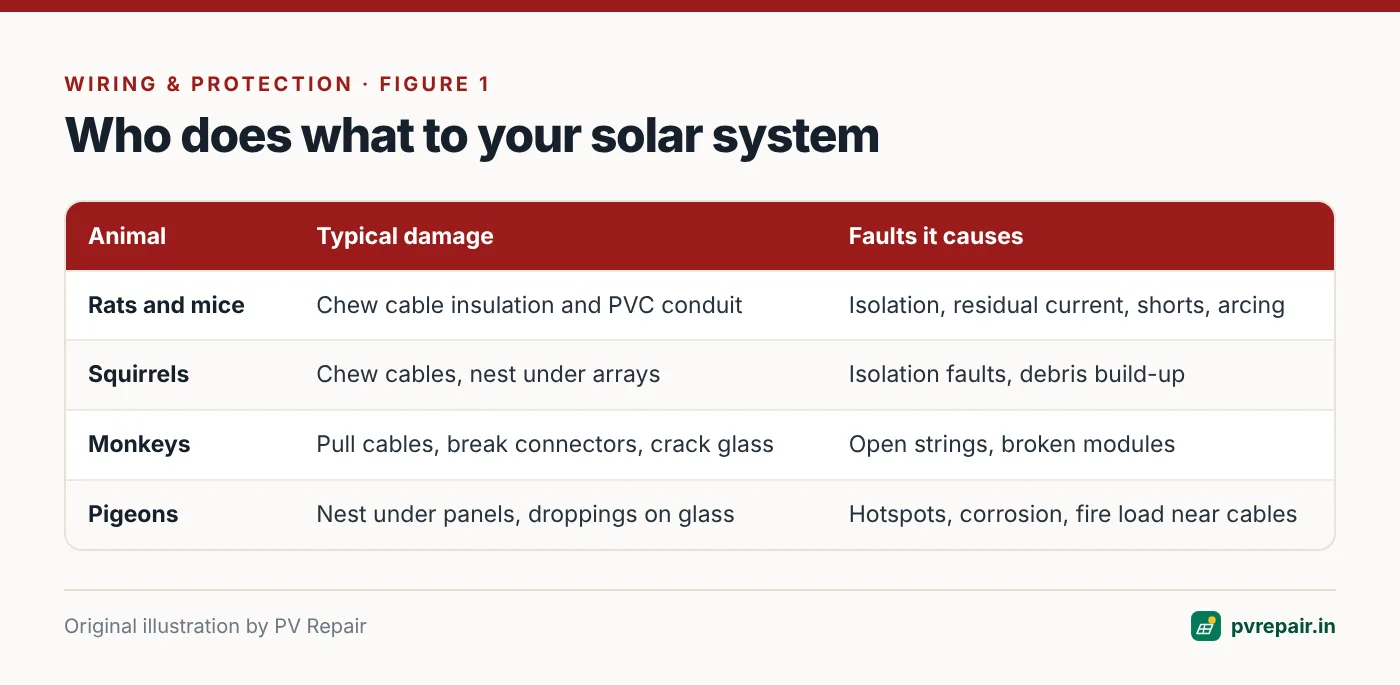
Rodents gnaw constantly to keep their teeth worn down, and cable insulation is a convenient target. They're attracted to the sheltered, warm space under panels and along parapets. Cables lying loose on the roof, in gaps between modules and roof surface, or run into buildings through gaps are especially vulnerable. Rodents also chew through PVC conduit.
Effects: exposed conductors, leakage to earth through the damaged insulation (isolation and residual current faults), short circuits between positive and negative cables, and potentially arcing.
Squirrels
Squirrels are agile climbers and chewers, common on rooftops with nearby trees. Like rats, they chew cables, and they also nest under arrays.
Monkeys
In many cities and hill towns, monkeys are a serious problem. They don't usually chew cables, but they pull on them, swing on mounting structures, sit and jump on modules, and play with loose connectors. They can break connectors apart, pull cables out of glands, crack module glass and bend lightweight structures.
Effects: open-circuit strings, broken connectors, cracked modules (see microcracks and broken glass), and loose cables that later get damaged.
Pigeons and other birds
Pigeons love the shaded, protected space under rooftop panels. Nests, droppings, feathers and debris accumulate, sometimes in large amounts. Droppings on the glass cause hotspots. Nesting material is a fire hazard near connectors, and acidic droppings can corrode metal. Birds may also peck at cable insulation. Accumulated debris holds moisture against cables and connectors.
Signs of animal damage
- Chew marks, nicks or exposed copper on cables.
- Pieces of insulation or droppings near cable runs.
- Disconnected or broken connectors; cables pulled out of glands.
- Nests, feathers and droppings under modules.
- Sudden string outages, isolation faults or residual current trips — especially if they started recently.
- Monkey footprints or scratches on module glass.
Prevention
1. Get cables off the roof surface and into protection
The most effective single step is to make sure no cable is exposed where animals can reach it:
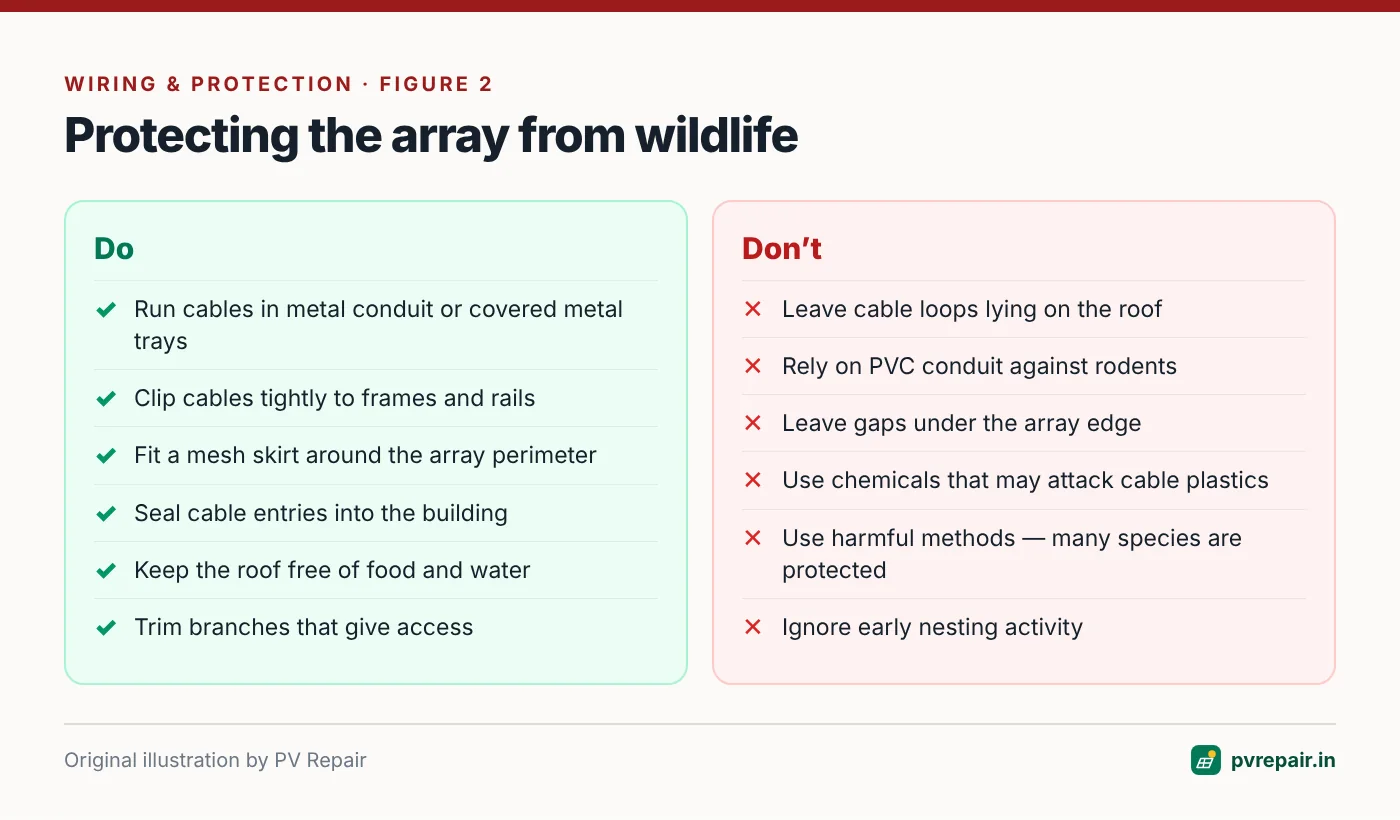
- Metal conduit (galvanised steel or aluminium) or covered metal cable trays for runs between arrays and down to the inverter. Rodents can chew through PVC; metal resists them.
- Flexible metal conduit for short transitions.
- Inside the array, clip cables neatly to the module frames and rails using UV-resistant, PV-rated clips or stainless steel ties, so nothing hangs down to the roof.
- No loose loops of cable on the roof — loops invite chewing and pulling.
2. Fit a mesh skirt around the array
A galvanised or coated wire mesh fitted around the perimeter of the array (between the module edges and the roof) prevents pigeons and rodents from getting underneath. Use mesh clips designed for solar arrays that attach without drilling into module frames. The mesh should be fine enough to keep pigeons out, and sturdy enough not to tear. Check that it doesn't block drainage.
3. Protect cable entries into the building
Seal gaps where cables enter buildings with proper glands and fire-rated sealants. Rodents use cable entries as highways.
4. Remove attractions
- Keep the roof clear of food waste, grains, bird feed and water containers near the array.
- Trim tree branches that give squirrels and monkeys easy access.
- Clear nesting material regularly.
5. Deterrents (with care)
- Bird spikes and similar deterrents on parapets and ledges near the array.
- Monkey-resistant structures — sturdier mounting, enclosed cable routes, and lockable enclosures.
- Avoid chemical deterrents near cables and connectors unless the product is confirmed compatible with PV cable insulation and connector plastics. Some chemicals can attack plastics.
Avoid harmful methods — the goal is to keep animals away from equipment, not to injure them. Local regulations protect many species, including monkeys.
6. Design for it from day one
When a new system is designed, plan cable routes, conduit and mesh into the bill of materials. Retrofitting protection is more expensive and disruptive than designing it in.
Repairing animal-damaged cables
Exposed DC conductors are dangerous
A chewed PV cable may expose live conductors at hundreds of volts in daylight. Don't touch damaged cables. Isolate the string (inverter off, DC isolator off, string fuses open) and wait for low light or cover the modules before working on it.
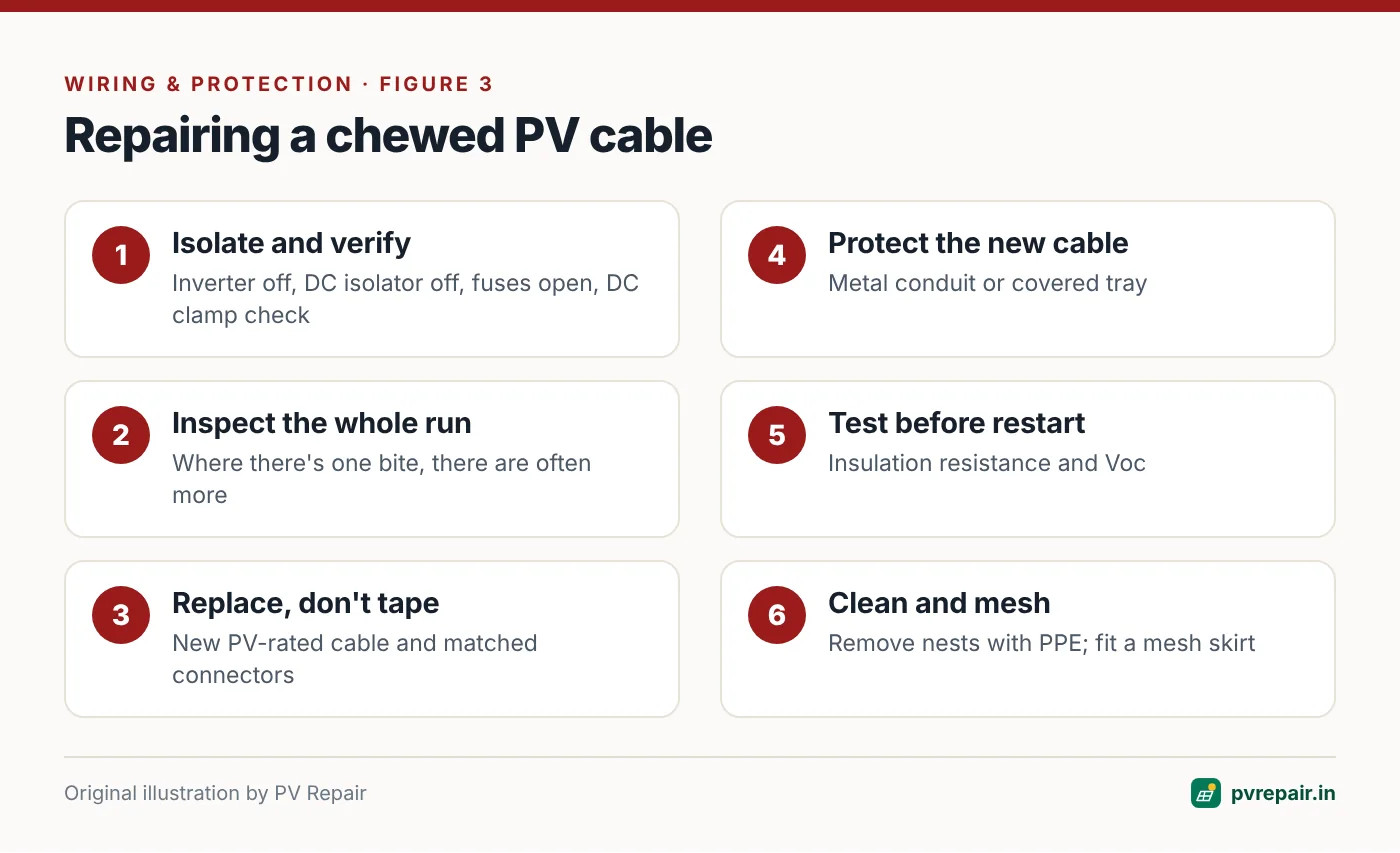
- Isolate the affected string and verify no current is flowing with a DC clamp meter.
- Inspect the entire run — where there's one chewed spot, there are often others.
- Replace the damaged section of cable with new PV-rated cable (same cross-section and type, e.g., to EN 50618 / IEC 62930), joined using matched connectors crimped with the correct tool. Where possible, replace the whole run between existing connectors rather than adding extra joints.
- Never tape a damaged PV cable as a permanent repair. Electrical tape doesn't provide the required insulation, UV resistance or long-term durability.
- Protect the new cable in conduit or a tray so the same thing doesn't happen again.
- Test the string's insulation resistance and Voc before returning it to service. See string testing.
- Clean out nests and debris from under the array, using PPE (droppings can carry pathogens), and fit mesh.
An inspection routine for high-risk sites
Sites near trees, markets, grain stores, water bodies or old buildings, and any site where monkeys are common, deserve more frequent checks than the usual annual service:
- Monthly (owner): a quick visual walk around the array edge from a safe position. Look for nests, feathers, droppings, chewed insulation fragments and connectors hanging below modules. Check the monitoring app for any string that's producing less than its neighbours.
- Quarterly (technician, on high-risk sites): inspect cable trays and conduit joints, check that mesh is intact and hasn't been pushed aside, clear any new nesting material, and check connectors at the array edges, where animals reach most easily.
- After any isolation or residual current fault: walk the affected string's full cable route before doing anything else. On animal-prone sites, chewed cable is the first suspect.
Prevention costs less than repair
Protecting cables and fitting mesh adds a modest amount to the cost of an installation. Compare that with the cost of a single fault: a technician's visit, replacement cable and connectors, lost generation while the string is down, and the risk that an exposed conductor causes a much bigger problem. On sites with a history of animal activity, retrofitting protection after the first incident is almost always worthwhile. Making it part of the original design is even better, because cable routes can be planned for metal trays from the start.
Cleaning pigeon droppings and nests safely
Accumulated droppings can carry diseases. Wear gloves, a mask (an N95 or better), and eye protection. Wet the material slightly to reduce dust before removing it. Don't use high-pressure water near connectors and junction boxes. After removal, fit a mesh skirt to stop re-nesting. See our cleaning guide for safe module cleaning.
Questions to ask your installer
If you're planning a new system in an area with monkeys, rodents or pigeons, ask before you sign: How will DC cables be routed and protected between rows and down to the inverter? Is a mesh skirt included? How are cables secured within the array? What happens if animal damage occurs in the first year? Clear answers to these questions are a good sign of an installer who has worked in local conditions.
Frequently Asked Questions
Can rats really chew through solar cables?
Yes. Rodents can chew through PV cable insulation and even PVC conduit. Exposed cables in sheltered areas are particularly at risk. Metal conduit or trays provide effective protection.
How do I stop pigeons nesting under my solar panels?
Fit a solar mesh skirt around the array perimeter after removing existing nests and debris. Keep the roof clean of food sources and consider bird deterrents on nearby ledges.
Will animal damage void my solar warranty?
Animal damage is generally not covered by module or inverter warranties, which cover manufacturing defects. Some property insurance policies may cover it — check your policy.
Can I repair a chewed solar cable with electrical tape?
No. Tape is not a safe permanent repair for PV DC cables. Replace the damaged section with PV-rated cable and matched connectors, and protect it from further damage.
Is mesh around solar panels safe for the system?
Yes, when designed for solar arrays and fitted properly with clips that don't damage the modules. It shouldn't block drainage or significantly restrict airflow under the panels.
Related guides
DC Arc Faults in Solar Systems: Warning Signs, Detection and Prevention
What DC arcs are, why they're more dangerous than AC arcs, the difference between series and parallel arcs, how arc fault detection (AFCI) works in inverters, and the installation practices that prevent arcing.
Solar Earthing and Lightning Protection: Common Mistakes and How to Fix Them
The earthing and lightning protection mistakes most often found on Indian solar rooftops — unbonded frames, shared or high-resistance earth pits, long SPD leads, missing separation distances — and how to correct each one.
Blown DC Fuses and Failed Surge Protection Devices in Solar Combiner Boxes
Why string fuses blow and SPDs fail in solar DC combiner boxes, how to size gPV fuses correctly, how to read SPD status indicators, and how to replace both safely without creating new problems.